
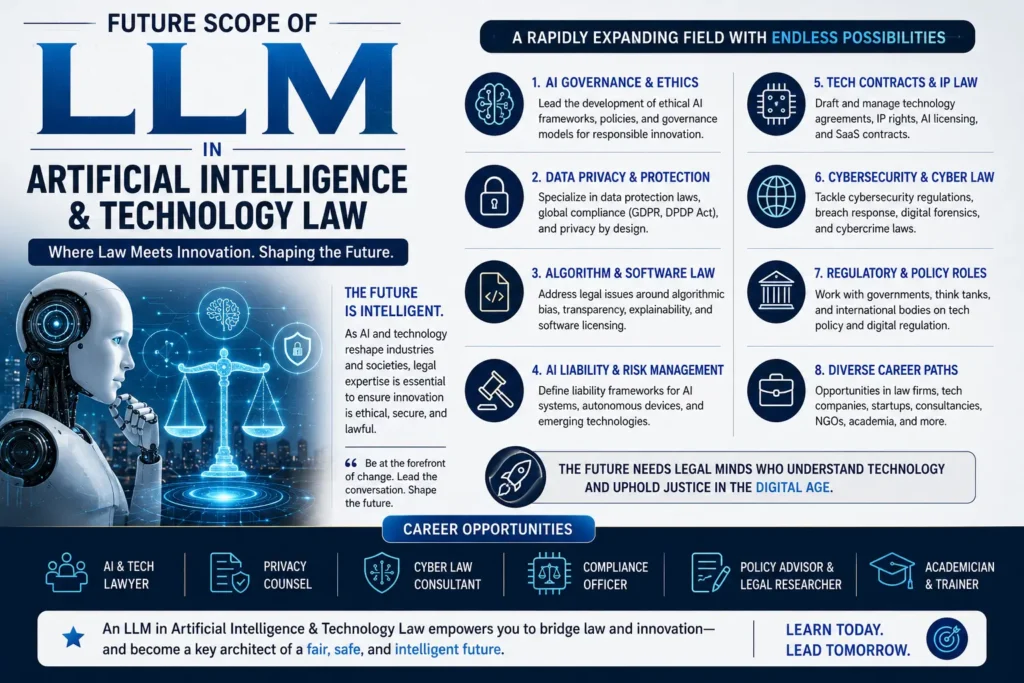

Future Scope of LLM in Artificial Intelligence & Technology Law: The rapid rise of Artificial Intelligence, digital platforms, data privacy regulations, and global cybersecurity concerns has created massive demand for legal professionals specializing in technology law.
An Master of Laws specialization in Artificial Intelligence & Technology Law is emerging as one of the most future-oriented legal careers in 2026.
Today, governments, multinational corporations, AI startups, and technology companies need legal experts who understand:
- AI regulations
- Data privacy laws
- Cybersecurity compliance
- Intellectual property rights
- Digital governance
- Technology ethics
As the digital economy expands globally, technology law professionals are becoming essential for modern businesses.
This article explores the future scope of LLM in Artificial Intelligence & Technology Law, including career opportunities, salary trends, top industries, future demand, and essential skills.
What is AI & Technology Law?
Technology Law deals with legal issues related to:
- Artificial intelligence
- Data protection
- Cybersecurity
- Digital transactions
- Online platforms
- Intellectual property
- Robotics & automation
It combines:
- Law
- Technology
- Ethics
- Business regulation
into one rapidly growing legal specialization.
Why AI & Technology Law Is Growing Rapidly in 2026
Technology is evolving faster than legal systems worldwide. Governments and companies now face legal challenges related to:
- AI-generated content
- Data misuse
- Deepfake technology
- Cybercrime
- Digital surveillance
- AI accountability
- Algorithmic bias
As a result, organizations are actively hiring legal professionals who can manage these emerging risks.
Future Scope of LLM in AI & Technology Law
The future scope is extremely strong because nearly every industry is becoming technology-driven.
High-Growth Areas Include:
- AI regulation
- Data privacy
- FinTech law
- Cybersecurity law
- Intellectual property
- E-commerce compliance
- Digital governance
Demand is expected to grow significantly over the next decade as governments introduce stricter digital laws.
Top Career Opportunities After LLM in AI & Technology Law
Quick Overview Table
| Career Role | Average Salary |
|---|---|
| AI Legal Consultant | ₹10–30 LPA |
| Technology Lawyer | ₹8–25 LPA |
| Data Privacy Consultant | ₹12–35 LPA |
| Cyber Law Specialist | ₹10–28 LPA |
| Compliance Officer | ₹8–20 LPA |
| Intellectual Property Lawyer | ₹8–22 LPA |
| FinTech Legal Advisor | ₹10–30 LPA |
| Policy & Regulatory Analyst | ₹7–18 LPA |
| Legal Researcher | ₹5–12 LPA |
| Corporate Legal Counsel | ₹12–40 LPA |
1. AI Legal Consultant
One of the Most Future-Proof Legal Careers
AI legal consultants help companies manage:
- AI regulations
- Ethical AI usage
- Liability issues
- Algorithm compliance
Why Demand is Increasing
Governments worldwide are developing new AI governance frameworks.
Top Hiring Sectors
- AI startups
- Technology companies
- Research organizations
Average Salary
₹10–30 LPA
2. Technology Lawyer
Best Career for Digital Business Law
Technology lawyers handle:
- Software agreements
- Digital contracts
- Licensing
- Technology disputes
Industries Hiring
- SaaS companies
- IT firms
- E-commerce businesses
- Software companies
Average Salary
₹8–25 LPA
3. Data Privacy Consultant
One of the Highest Paying Legal Specializations
Data privacy consultants help organizations comply with:
- Data protection laws
- User privacy regulations
- International privacy standards
Why It’s Trending
Companies handling customer data face strict legal responsibilities.
Average Salary
₹12–35 LPA
4. Cyber Law Specialist
Fast-Growing Legal Career in Digital Security
Cyber Law specialists work on:
- Cybercrime cases
- Digital fraud
- Online security regulations
- Cyber investigations
Best Industries
- Cybersecurity firms
- Government agencies
- IT companies
Average Salary
₹10–28 LPA
5. Compliance Officer
High Demand Corporate Governance Role
Compliance officers ensure companies follow:
- Technology regulations
- Privacy laws
- Corporate policies
- Industry standards
Best Hiring Sectors
- Banking
- FinTech
- Healthcare
- IT companies
Average Salary
₹8–20 LPA
6. Intellectual Property (IP) Lawyer
Strong Career for Innovation & AI Industries
Intellectual Property Law experts protect:
- AI-generated innovations
- Software patents
- Copyrights
- Digital trademarks
Future Scope
Excellent due to increasing digital innovation and AI development.
Average Salary
₹8–22 LPA
7. FinTech Legal Advisor
Excellent Career in Digital Finance Industry
Financial Technology companies need legal experts for:
- Digital payment laws
- Cryptocurrency regulations
- Financial compliance
- Online transaction security
Why It’s Growing
FinTech expansion is creating complex legal challenges globally.
Average Salary
₹10–30 LPA
8. Policy & Regulatory Analyst
Career Opportunity in Government & Research
Policy analysts help develop:
- AI regulations
- Digital governance policies
- Technology compliance frameworks
Best For
Students interested in:
- Public policy
- Research
- Government advisory
Average Salary
₹7–18 LPA
Skills Required for AI & Technology Law Careers
Most Important Skills in 2026
| Skill | Importance |
|---|---|
| Legal Research | Very High |
| Technology Understanding | Very High |
| Cybersecurity Awareness | High |
| Data Privacy Laws | Very High |
| AI Ethics Knowledge | Growing Fast |
| Contract Drafting | High |
| Communication Skills | Very High |
| Regulatory Compliance | High |
Best Certifications After LLM in Technology Law
Recommended Certifications
- Cybersecurity Law Certification
- GDPR & Data Privacy Programs
- AI Ethics Certification
- Intellectual Property Courses
- Compliance Management Certification
These certifications improve:
- Corporate placements
- Global career opportunities
- Salary growth
Industries Hiring AI & Technology Law Professionals
Top Hiring Industries
- IT companies
- AI startups
- FinTech companies
- Cybersecurity firms
- E-commerce platforms
- Consulting firms
- Government agencies
- International organizations
Future Demand for Technology Lawyers
Why Demand Will Continue Growing
The future digital economy depends heavily on:
- AI governance
- Data protection
- Cybersecurity regulations
- Technology compliance
Governments worldwide are introducing stricter laws around:
- AI accountability
- Privacy protection
- Digital security
- Algorithm transparency
This ensures long-term demand for technology law experts.
Salary Trends After LLM in AI & Technology Law
Average Salary by Experience
| Experience Level | Salary Range |
|---|---|
| Freshers | ₹5–10 LPA |
| Mid-Level Professionals | ₹10–20 LPA |
| Senior Experts | ₹20–45+ LPA |
Is LLM in AI & Technology Law Worth It?
Yes — It Is One of the Most Future-Oriented Legal Degrees
This specialization offers:
- High salary potential
- Global career opportunities
- Corporate demand
- Technology sector growth
- Future job security
It is especially valuable for students interested in:
- Technology
- Innovation
- Cybersecurity
- Digital governance
- AI regulation
Best Countries for Technology Law Careers
Top Global Markets
- United States
- United Kingdom
- Canada
- Singapore
- Germany
- United Arab Emirates
- India
These countries are rapidly developing AI and technology regulations.
How to Build a Successful Career in Technology Law
Step-by-Step Strategy
Learn Technology Basics
Understand:
- AI systems
- Cybersecurity
- Data privacy
- Digital platforms
Build Legal Expertise
Focus on:
- Contract drafting
- Compliance
- Technology regulations
Gain Internship Experience
Internships in:
- Tech companies
- Law firms
- Cybersecurity organizations
can significantly improve employability.
Stay Updated
Technology laws change rapidly, so continuous learning is essential.
Future of AI & Technology Law in India
India’s digital economy is expanding rapidly because of:
- AI adoption
- Startup growth
- Digital banking
- E-commerce expansion
- Data protection regulations
This creates enormous opportunities for specialized legal professionals.
Final Thoughts
The future scope of LLM in Artificial Intelligence & Technology Law is extremely promising in 2026 and beyond.
As businesses, governments, and technology platforms become more digitally dependent, demand for legal professionals with expertise in:
- AI regulation
- Cybersecurity
- Data privacy
- Technology compliance
- Digital governance
will continue growing globally.
Students who combine:
- Legal expertise
- Technology understanding
- Analytical thinking
- Regulatory knowledge
- Communication skills
can build highly rewarding careers in one of the fastest-growing legal domains of the future.
Frequently Asked Questions (FAQs)
Is AI & Technology Law a good career in 2026?
Yes, it is one of the fastest-growing and future-oriented legal specializations globally.
What is the salary after LLM in Technology Law?
Professionals can earn between ₹8–35+ LPA depending on experience and specialization.
Which industries hire technology lawyers?
IT companies, AI startups, FinTech firms, cybersecurity organizations, and consulting companies hire technology law professionals extensively.
Can technology lawyers work internationally?
Yes, technology law offers strong global career opportunities because digital regulations are expanding worldwide.
Which skills are important for AI & Technology Law careers?
Technology understanding, legal research, cybersecurity awareness, data privacy knowledge, and compliance expertise are highly important.